
You can write the most emotionally powerful song of your life and still be invisible. That's the brutal reality for thousands of independent musicians who pour everything into their craft but never break through the noise. The difference between artists who connect and those who fade isn't always talent. It's brand clarity. A strong artistic brand tells your audience who you are before they even press play. This guide walks you through every stage of building that brand, from defining your creative identity to measuring whether it's actually working, so your music gets the attention it deserves.
Table of Contents
- Defining your artistic identity
- Laying the groundwork: visuals, voice, and audience research
- Building your brand step by step
- Common pitfalls and how to avoid them
- Measuring your brand's impact and iterating
- Why artistic branding is more about connection than perfection
- Showcase your brand with a professional artist portfolio
- Frequently asked questions
Key Takeaways
| Point | Details |
|---|---|
| Start with self-awareness | Clarify your artistic vision and values before building your brand. |
| Consistency is key | Use the same visuals and messaging across all platforms for best results. |
| Build in steps | Launch your brand methodically, from visual identity to online presence. |
| Learn from mistakes | Understand and avoid common branding pitfalls other musicians make. |
| Track and refine | Regularly measure your brand’s impact and evolve as needed. |
Defining your artistic identity
Your brand doesn't start with a logo or a color palette. It starts with you. Before you design anything or post a single promotional photo, you need to understand what you actually stand for as an artist. This is where most musicians skip ahead and pay for it later.
Branding importance for musicians is often misunderstood as surface-level aesthetics, but the real foundation is self-awareness. What do you believe in? What experiences shaped your music? What do you want listeners to feel when they walk away from your songs? These aren't abstract questions. They're the building blocks of every brand decision you'll make.
Start by identifying your core values as an artist. Are you driven by raw honesty? By joy and celebration? By processing pain and turning it into something beautiful? Your values shape how people perceive you, even when you're not actively promoting yourself. They come through in your lyrics, your social media tone, your live presence, and the way you talk about your work.
Next, map out your influences and motivations. Not to copy them, but to understand the creative DNA you bring to your art. An artist who grew up on soul music and lived through loss writes differently than someone who came up in punk and channels anger. That backstory is part of your brand story.
Here are some questions to work through when articulating your brand story:
- What message do you most want to communicate through your music?
- What experiences or emotions do you return to again and again in your songwriting?
- Who is the version of yourself you want fans to know?
- What would you want someone to say about your music to a friend?
- What makes your perspective on love, pain, or resilience different from anyone else's?
Writing out answers to these questions, even messily, gives you raw material to shape your narrative. Revisit them over time. Your story will sharpen.
Pro Tip: Keep a dedicated journal just for your artist identity. Write without editing yourself. After two weeks, look for patterns in what you keep returning to. Those recurring themes are your brand core.
Laying the groundwork: visuals, voice, and audience research
Once you have a clear identity, it's time to build your brand's outer shell and understand your audience. The goal here is consistency. A fan who finds you on Instagram, then visits your website, then sees your show should feel like they're encountering the same artist every time.

Music brand basics include visual elements like color palettes, typography, and photography style, along with your verbal tone, which is how you write captions, bios, and messages to fans. Both need to feel like extensions of the same personality.
For visuals, start with three to five colors that reflect your artistic mood. A songwriter who explores heartbreak and resilience might lean into deep blues, warm amber, or muted earth tones. Someone who makes high-energy anthems might go brighter. Your photography style matters too. Candid and raw reads differently than polished and cinematic.
Your voice, meaning the way you write and speak publicly, should match your music's emotional register. If your songs are vulnerable and introspective, your captions and bio should feel the same way. Inconsistency here creates confusion, and confused audiences don't become loyal fans.
| Brand element | What it communicates | Practical tip |
|---|---|---|
| Color palette | Mood and emotional tone | Choose 3-5 colors and stick to them across all platforms |
| Logo or wordmark | Professionalism and identity | Keep it simple and legible at small sizes |
| Photography style | Personality and vibe | Shoot in consistent lighting and settings |
| Bio and captions | Voice and values | Write like you speak, not like a press release |
| Music packaging | Artistic vision | Match artwork to the emotional theme of each release |
Audience research is equally important. You're not creating your brand in a vacuum. Knowing what your listeners respond to helps you make smarter decisions without compromising your authenticity.
- Study comments on your existing posts and songs for recurring emotional reactions
- Look at artists your audience also listens to and note what those artists do visually
- Pay attention to which content formats (video, photo, text) drive the most engagement
Pro Tip: Run a simple Instagram or Facebook poll asking fans to choose between two visual directions. Even ten responses give you useful signal about what resonates.
Building your brand step by step
With your essentials mapped out, now it's time to bring your brand vision to life, one step at a time. Don't try to do everything at once. A focused rollout beats a chaotic one.
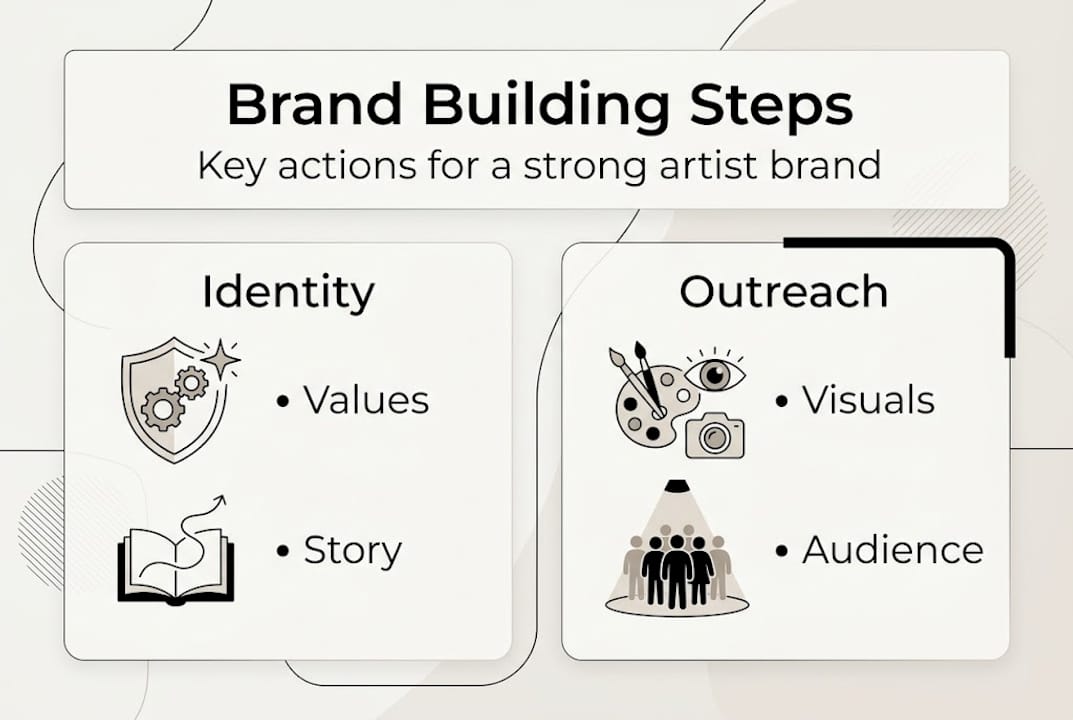
An artist branding guide will often emphasize that your online presence is your first impression for most potential fans. Prioritize getting that right before anything else.
Here's a practical sequence to follow:
- Write and refine your artist bio. This is the single most-read piece of copy you'll produce. Make it emotionally engaging, specific, and written in your voice.
- Build or update your website. Your site is your home base. It should house your music, your story, your visuals, and a way to contact or support you.
- Establish your social media presence. Choose two platforms and commit to them fully before expanding. Consistency beats volume.
- Create a press kit. Include your bio, high-resolution photos, links to music, and key facts about your career.
- Play live or release content consistently. Live shows and regular releases keep your brand active and growing in people's minds.
- Seek collaborations. Working with other artists exposes your brand to new audiences and adds credibility.
| Approach | Pros | Cons |
|---|---|---|
| DIY branding | Low cost, full creative control | Time-intensive, steep learning curve |
| Hiring a professional | Polished results, saves time | Higher cost, requires clear creative direction |
Pro Tip: Perfect your artist bio and the visual consistency of your main profile before launching any wider campaign. First impressions compound quickly.
Common pitfalls and how to avoid them
Having made progress, it's just as crucial to sidestep common missteps as you refine your new brand. Even well-intentioned artists fall into patterns that quietly undermine their brand's power.
Musician branding mistakes show up in predictable ways. Here's what to watch for and how to fix each one:
- Inconsistency across platforms. Using different bios, photos, and tones on each platform fragments your brand. Fix it by creating a simple brand style guide you refer back to every time you post or update anything.
- Chasing trends instead of your truth. Jumping on every viral format or aesthetic dilutes what makes you distinct. Stay aware of trends, but filter them through your brand identity before adopting them.
- Neglecting your personal story. Many musicians focus so much on promoting releases that they forget to share the human behind the music. Fans connect with people, not just songs.
- Inconsistent posting or disappearing for months. Brand momentum is built through regular presence. Even one thoughtful post per week keeps you in your audience's awareness.
- Overcomplicating the visual identity. Too many colors, fonts, and styles create visual noise. Simplicity is memorable.
Your brand isn't just a logo. It's the feeling you leave behind every time someone encounters your music, your words, or your presence.
The fix for most of these mistakes is the same: return to your brand story. When you're clear on who you are and what you stand for, decisions about what to post, how to look, and what to say become much easier.
Measuring your brand's impact and iterating
To ensure all your work pays off, you need to regularly evaluate and adapt your branding strategy. Gut feeling matters, but data keeps you honest.
How musicians can measure brand impact comes down to tracking the right signals consistently. Here are the key metrics to watch:
- Social media follower growth over 30, 60, and 90-day windows
- Engagement rate (likes, comments, shares divided by reach) on posts
- Streaming numbers and playlist placements across platforms
- Website traffic and how long visitors stay on your site
- Direct fan feedback through messages, comments, and survey responses
| Metric | What it tells you |
|---|---|
| Engagement rate | Whether your content actually connects emotionally |
| Follower growth rate | Whether your brand is attracting new listeners |
| Streaming growth | Whether your music is reaching beyond your existing fanbase |
| Website bounce rate | Whether your site holds attention or loses it quickly |
| Fan messages and comments | The emotional impact your brand is making |
Review these numbers every month. Look for patterns, not single data points. If engagement drops after you change your visual style, that's feedback. If a candid, personal post outperforms a polished promotional one, that's feedback too. Your audience is always telling you something.
Brand evolution is healthy. Updating your look, refining your story, or shifting your focus as you grow isn't inconsistency. It's maturity. The key is to evolve intentionally, not reactively.
Why artistic branding is more about connection than perfection
Here's something most branding guides won't tell you: the artists who build the deepest fan loyalty are rarely the ones with the most polished visuals. They're the ones who made their audience feel seen.
I've watched independent musicians spend months obsessing over logo revisions and color theory while their audience engagement flatlined. Meanwhile, an artist who posted a raw, unfiltered voice memo about a breakup would generate more genuine connection in 24 hours than a perfectly curated campaign did in a month.
Perfection is a distraction. Authenticity is the strategy. Fans don't remember your brand guidelines. They remember the lyric that made them cry in their car. They remember the caption where you admitted you almost gave up. They remember the show where you played through your nerves and gave everything.
Your brand is the emotional residue you leave behind. That residue comes from honesty, vulnerability, and the courage to share your real story even when it's uncomfortable. Build the visual foundation, yes. Create consistency, absolutely. But never let the pursuit of a perfect brand get in the way of being a real one.
Showcase your brand with a professional artist portfolio
Ready to make your artistic brand visible? Here's how to put it on proud display.
All the identity work, the visuals, the story, and the music need a home online. A professional artist portfolio brings every element of your brand together in one place, giving fans, collaborators, and industry contacts a clear window into who you are and what you create.
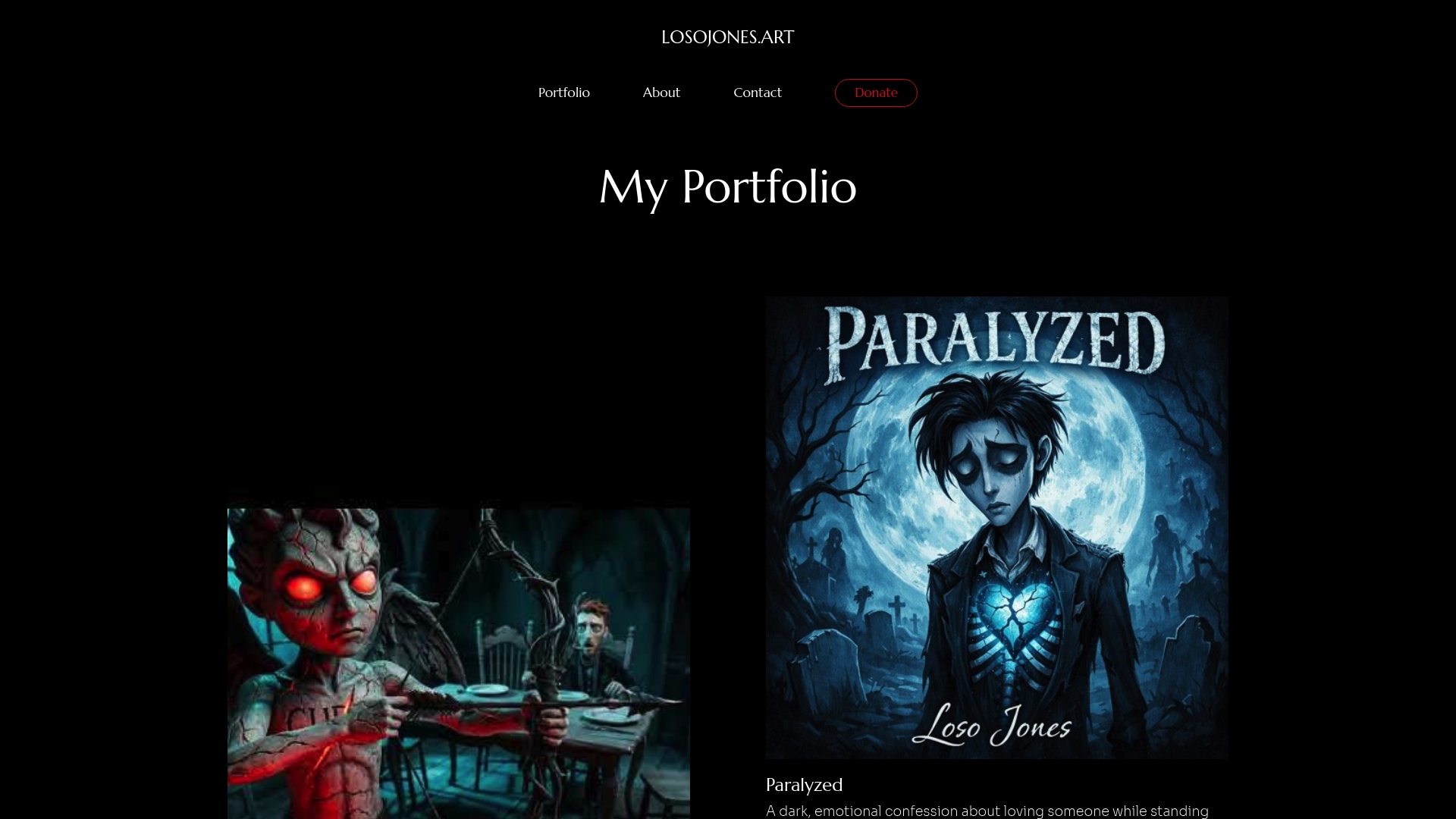
Losojones.art is a live example of what a songwriter's digital home can look like when it's built around emotional storytelling and authentic creative vision. It's easily updateable, visually consistent, and puts music front and center. If you're ready to take your brand from concept to something fans can actually experience, start by seeing what a focused artist portfolio looks like in practice.
Frequently asked questions
What is the most important first step in building an artistic brand?
Defining your artistic vision and story is the essential first step, as it shapes every other aspect of your brand. Everything from your visuals to your social tone flows from that core identity.
How can I know if my brand is resonating with fans?
Track audience engagement, social media feedback, and growth metrics to measure how well your brand connects. Digital metrics and feedback give you the clearest picture of what's working.
Do I need a professional logo and website from the start?
Start simple, but consistent visuals and a website become critical as you grow and seek new fans or industry attention. A polished online presence builds credibility that opens real doors.
How often should I update my artist brand?
Assess your brand every few months and tweak as you evolve or your audience changes. Iterating your brand over time keeps it relevant without losing the consistency fans rely on.